Veteran Australian keyboardist Dr Geoffrey Lancaster has had a busy time of it in the recording studios recently.
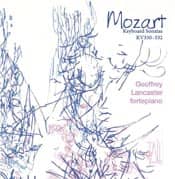
Not only is he continuing his survey of all of Joseph Haydn’s keyboard sonatas, using a variety of fortepianos from the ANU School of Music’s early instruments collection — Vol 4 is out now — but he has also recorded a witty and charming trio of Mozart piano sonatas, including the A major K331 famous for its Rondo alla Turca.
And on top of that comes a beautiful version of Haydn’s the Seven Last Words of Christ, more often heard in string quartet or full orchestral form. The composer fully approved of the keyboard version and, despite some nagging doubts before putting this on my CD player, I can confirm that with Lancaster’s masterly command of articulation, expression and dynamic, the composer was right.
Far from fears that a mere fortepiano would lack the dramatic depth for this long and extraordinary deeply felt composition, Lancaster imbues it with great spirituality and compelling beauty of line. At 75 minutes long and comprising nine slow movements (an introduction and turbulent postlude with seven sonatas representing the seven utterances of Christ from the cross), the listener’s attention and appreciation never wavers. It’s a remarkable achievement.
The fourth volume of Lancaster’s new recording of the Haydn cycle — he recorded some of them for ABC Classics but the Tall Poppies set is far superior — features the final three works. It’s generally accepted that Haydn composed 55 sonatas, but because when they were categorised there were several doubtfully attributed to him we get Nos 60, 61 and 62 on this disc.
Composed in 1794 they are full of the composer’s trademark wit and, like his mature string quartets, they display a considerable range of emotions and moods. As is his custom Lancaster eases the listener into each work with a brief improvised prelude in the same key as the work that follows.
He adopts the same approach for the Mozart, an album which marks Lancaster’s return to the composer for Tall Poppies after 26 years. He recorded Unexpurgated Mozart with the Song Company in 1991.
The Mozart set is a delight from start to finish and Lancaster is not averse to having some fun, especially with the Rondo where he uses rubato liberally and even improvises a mini-cadenza, something that the composer was known to do on occasions.
Lancaster performs on a fortepiano based on an 1805 Anton Walter & Sohn — Mozart owned one of his instruments — which was built by Peter McNulty in 2011. Its sound is surprisingly full, once your ear adjusts from Steinway mode.
The album covers feature Australian artists. Fred Williams for the Haydn sonatas, Roy de Maistre for the Seven Last Words and Polish artist Gosia Wlodarczak, a friend of Lancaster who used to live in Perth, for the Mozart.
© Steve Moffatt,
Wentworth Courier
May 10, 2018
“In loco Mozartis, Lancaster’s recording of the three beloved sonatas of 1784 is a feast of fantasy, invention, and eloquence.”
The three sonatas by Mozart that Artaria released as a set in 1784 receive fine performances on this 2017 disc, recorded by the doyen of Australia’s fortepianists, Geoffrey Lancaster. This trio of sonatas, especially the middle A major sonata with its alla turca finale, have remained perennially popular and, as Lancaster points out in his notes, ‘are an exemplar of Mozart’s kaleidoscopic and abundant imagination, and reveal a satiating variety of ideas and astonishing levels of emotional intensity’.
Lancaster is evidently completely at home in the many idioms of these sonatas — the lyrical, the virtuosic, and everything in between. The most accomplished single performance is that of the A major sonata. Its first movement in particular is a kind of microcosm of the whole span of the three-sonata collection, ranging from the simple lyricism of the theme, through the pathos of the minor-key third variation, the hand-crossing virtuosity of the fourth variation and the delicate filigree of the fifth variation. Lancaster shows an enviable capacity to give the impression that he is acting in loco Mozartis in this movement, as though, like the composer himself, he is making up the variations on the spot according to the working out of a known harmonic pattern, deployed through figuration and instrument-specific techniques, but which only reach proper fulfilment in the sounding moment. Key to this is the eloquence of Lancaster’s articulation, the joyfully erratic nature of his hiatuses and rallentandiand the delicate overlay of additional ornamentation, all of which confer on the music a kind of fantastic parlando quality central to the immediacy of his expression. Also key in this movement is Lancaster’s sense of colour, conveyed through the use of the pedal. Especially impressive is his willingness just to let everything hang on under a single pedal through the A minor variation, especially over the diminished chord on D sharp in the centre of the second section, carefully judged with reference to the way his Paul McNulty fortepiano allows sounds to decay.
Another of Lancaster’s many qualities is his commanding knowledge of the entire repertoire of Mozart’s music, particularly the symphonic music. This struck me particularly in the middle menuetto: no polite four-square Haydn-style minuet, this movement shows Mozart at his most colouristic in the most pedestrian of formal structures, Lancaster revealing adumbrations of the minuet movements of the late symphonies, particularly the ‘Jupiter’ symphony.
Given its position as perhaps the best-known single movement of Mozart’s keyboard sonatas, it is a shame that the alla turca movement is read in quite the heavy-handed way it is here. Individual ideas are good — Lancaster shuns some of the more stereotypical interpretations of articulation accorded to the rondo subject — but other ideas seem too left-field to be quite right. Lancaster’s notes point out the obvious connection to the Janissary music so common in Europe, particularly once the actual threat of Ottoman invasion had abated enough to allow it to be prettified in art music, and he is evidently seeking to recreate some of the banging and crashing of the overture to Die Entführung (written just before this sonata), but the realisation of the idea takes the music painfully close to Alkan on the one hand and Liszt’s Hungarian rhapsodies on the other.
The remaining two sonatas are equally well played, and again I would point out the slow movements as Lancaster’s real strengths, theadagio of the F major sonata again marked by the impression that Lancaster is thinking the music through (with unknown results) while the performance is happening, and the andante cantabile of the C major sonata pregnant in the minor-key section with a profound anguish that the listener can only bear that long knowing that the radiance of a major-key section is soon to follow.
Lancaster plays an extremely brief prelude to each sonata, the shortest lasting less than a third of a minute. An entire page of the programme notes is dedicated to justifying this practice on the grounds that (historically at least) it allowed ‘the performer to test the piano, its tuning, the acoustic environment, and to assert his or her creative individuality [and to]reveal the affective character of the tonality of the work that follows’. I have heard Lancaster prelude live before some of Haydn’s sonatas, and I can attest to the fact that the practice of preluding does make you hear the following work differently. I think arguments about testing the piano (surely the performer has practised considerably on this piano before recording or performing live?), or its tuning (surely a professional has tuned the piano?), or the acoustic environment (surely the performer got time on the instrument in the space before recording or playing live?) are specious but there is indeed something to Lancaster’s remaining claims: the prelude provides a kind of précis of the performer’s understanding of the ‘affective character of the tonality of the work’ through ‘his or her creative individuality’.
I would have to say, though, that this works best in the live context where one cannot be sure what is going to happen, and Lancaster does flag the oddity of recording a single example of a prelude on a CD. If the prelude is to be anything, it needs to be an immediate statement to the audience of ‘today, this is how I will tell you the story of Mozart’s sonata in A major’: recording it runs the risks of destroying what I take to be its fundamental mission as well as allowing the prelude to be criticised for its potential banality. I would just as soon have done without these preludes on this CD and, with an intelligence as weighty as Lancaster’s doing the heavy lifting in the sonatas proper, listening audiences have over an hour to drink in his thoughts on this great composer.
© John Weretka
February 2018,
musictrust.com.au/loudmouth/
It takes about 10 seconds to realise there is something quite strange or very wonderful going on here.
The cover art announces the inimitable Geoffrey Lancaster, that wonderful ratbag Australian exponent of preclassical music, at a fortepiano playing three well-known Mozart keyboard sonatas. And yet the wizardry of Tall Poppies seems to have recorded Mozart himself. Images of Tom Hulce’s wilful portrayal in Milos Forman’s wonderful 1984 movie Amadeus float by in the imagination.
Hulce/Lancaster/Mozart is not merely performing, he is actually composing these chestnuts. Here they emerge as fragments, outbursts, conversations, sweet nothings in the ears of periwigged courtiers and plotters in Salzburg and Vienna back in 1783.
There is barely a bar played in the conventional four-square manner. The musical architecture is taken apart and reassembled in bizarre yet illuminating ways.
These are not so much notated compositions as recorded improvisations or even accompaniments to imagined operatic arias. Lancaster’s nimble fingers glide and caress a fortepiano constructed by Paul McNulty which is based on a 1805 Viennese model, and tuned to A-330 pitch.
Recorded in Perth in June 2016, this instrument produces a lively palette of colours. Lancaster’s annotations detail his often notorious thoughts on performance style.
Listeners to the familiar Rondo Alla Turca from the Sonata in A, K. 331, to take only a short extract from the 73 minutes on this bristling album, will find themselves tossed between outrage and exhilaration.
Purists have condemned these performances, but I salute a shibboleth-shattering performer and a brave recording company for sweeping away 250 years of straitlaced stylistic purity and pomposity. I will never be able to listen to these familiar pieces in quite the same way again.
If there is one album to blow fresh breeze into a new year, this is it.
Vincent Plush
The Australian 13 January 2018
Geoffrey Lancaster’s new CD of Mozart piano sonatas, Mozart Keyboard Sonatas KV330–332, is by turns beguiling and infuriating, thrilling and glib. Well, perhaps glib isn’t quite the word — Lancaster may throw away certain notes and phrases, turning them into the merest of asides, but only, one suspects, after much thought.
Lancaster, professor at the WA Academy of Performing Arts at Edith Cowan University, is one of the foremost exponents of the fortepiano. This is the instrument for which Mozart composed his sonatas, the forerunner of the modern piano and markedly different from a Steinway grand. The shiny, black leviathan of the modern concert stage is designed to sound as even-toned as possible from the bottom of the keyboard to the top. But the fortepiano is anything but even. The highest notes are bright, thin and flute-like, the bottom octave has a dark, bassoony burr. These contrasting colours bring drama but also clarity. You can hear the different layers of the music, because they don’t blend into a sonorous wodge (however lovely that wodge might sound in its own right). And the tones die away sooner, even with the sustaining pedal down.
But the sound of the fortepiano — beguiling as it is, and beautifully recorded — is the least of the revelations on this new CD. Lancaster’s disc contains the three sonatas Mozart composed in 1783 — familiar, not to say famous, works — so the first surprise comes when you put on the CD, expecting the sonata in C, K. 330, and you fail, utterly, to recognise the music. This is because it’s not Mozart: it’s Lancaster.
In the eighteenth century and beyond — even into the twentieth century — pianists would routinely preface their performances with an improvised prelude. We know that Mozart himself did it. It’s a preparatory flourish in the style and key of the music to follow, a clearing of the throat, a call to attention that leads, after the merest pause, into the sonata itself. In the context of this recording, Lancaster’s preluding has a slightly different function: it makes you listen harder to music you probably already know.
When it comes to Mozart’s own notes, Lancaster makes sure these, too, are as arrestingly unfamiliar as possible. His attitude is one of conjecture but not surmise. History informs his approach — his essay in the booklet is footnoted to within an inch of its life — but the results are anything but theoretical. What Lancaster’s research tells him is that players of Mozart’s day (including the composer) would typically present such music with the utmost freedom. If you know the conventions — and these include liberal use of ornamentation and an exceptionally elastic approach to tempo — you can apply them at will, and Lancaster certainly does that.
Occasionally, I feel he goes too far. For example, in the A major sonata, K. 331, the first movement is a set of variations, lasting, in Lancaster’s account, more than a quarter of an hour. Since the variations themselves form a display case for Mozart’s compositional brilliance and Lancaster’s pianistic bravura, you might hope he would at least present the simple theme… well, simply. But by bar 8, he’s already applied the brakes to the half cadence. It seems fussy. Doubtless Lancaster would think I was just being boring.
I also had my doubts about the famous Rondo alla Turka with which this sonata concludes. It’s magnificently clattery on this instrument, the Janissary music that so captivated the composer here vividly fiercesome. For good measure, just before the end, a crazy, improvised cadenza irrupts thrillingly into the music. But once again I wondered whether this Turkish march music might be more effective if it marched more and lurched less.
In magazines such as the Gramophone, which has reviewed classical recordings since 1923, the question is often posed: is this a recording to live with? Does the recording contain the sort of performance the listener might want to return to? It implies a safe pair of hands, a bland performance without eccentricity.
Geoffrey Lancaster’s CD, quite rightly, is a take-no-prisoners assault on such pusillanimity. For Lancaster, music isn’t meant to be house-trained, any more than it was for Mozart. Lancaster’s performances are certainly not the sort that you would want to listen to every day — though, right now, that is exactly what I’m doing! — and in time, I imagine, the pianist’s wilder exaggerations will come to seem like affectations (some of them already do).
None of that is the point. The point is that this CD demands to be heard and will force you to think about Mozart and his music. Lancaster, I imagine, would say that this is the only reason he performs.
© Andrew Ford December 2017 http://insidestory.org.au/wild-conjecture/ |